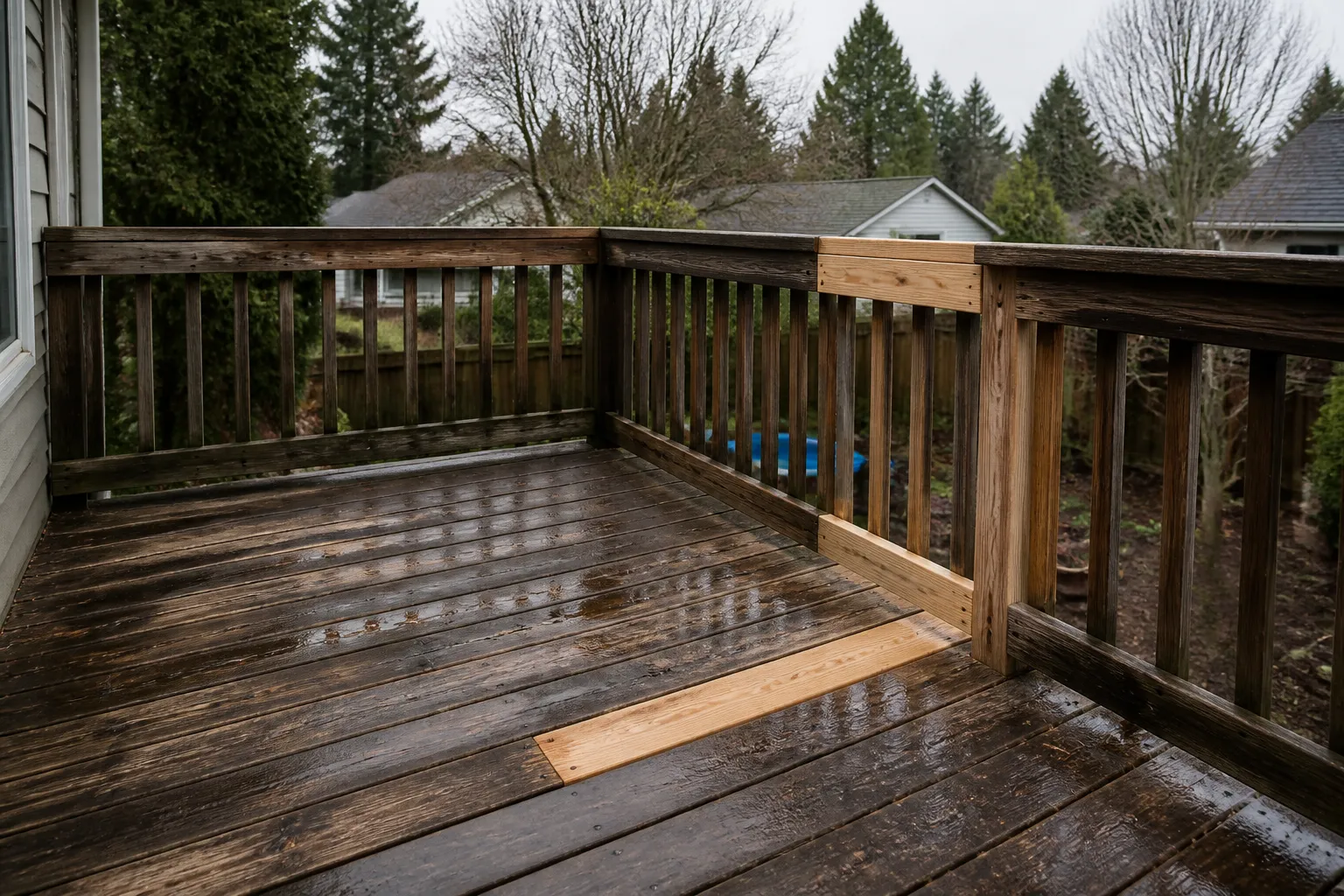
Loose boards, soft spots, wobbly rails, and peeling finishes can turn a deck from a favorite hangout into a space you avoid. If your deck has started to feel uneven, look weathered, or show signs of damage, it is worth getting it checked before small trouble becomes a bigger repair.
Vancouver Deck Builder helps homeowners across Vancouver bring tired outdoor spaces back to dependable condition with deck repair services tailored to the problem at hand. We assess what is failing, explain the practical repair options, and fix the issues that matter most so your deck can be used with more confidence.
Some deck problems are easy to overlook at first. A board that flexes underfoot, a railing that shifts, or a finish that has worn thin may seem minor, but those changes often point to damage underneath the surface. Catching them early can help preserve more of the structure and keep the deck more enjoyable for daily use.
Homeowners often call us when the deck still looks usable from a distance, but feels off once you step onto it. That is usually the right time to take a closer look. Vancouver Deck Builder can evaluate the condition of the deck and recommend repairs that match the level of wear, whether the issue is isolated or spread across several areas.
Decks age at different speeds depending on their materials, use, and exposure. Some problems are cosmetic, while others affect how the deck feels and holds up day to day. Knowing the difference helps you decide what needs attention now and what can wait.
Worn stain, peeling paint, and rough texture can make a deck look neglected and can also leave the surface more vulnerable to further deterioration. Refinishing repairs this kind of wear by restoring the finish after the surface has been cleaned and prepared.
Cracked or warped boards can create an uneven walking surface and make the deck less comfortable to use. In many cases, replacing damaged boards is the cleanest way to improve both appearance and stability without changing the entire structure.
When railings feel loose or areas of the deck have started to shift, the issue may involve connections or support points. Those repairs need careful attention because the visible symptom is often only part of the problem. We look at how the affected area ties into the rest of the deck before suggesting the next step.
Deck repair is not one single service. The right fix depends on what is failing, how far the damage has spread, and what you want the finished deck to look like. We focus on practical solutions that improve use without pushing you toward work you do not need.
Damaged boards can often be replaced one section at a time. This helps restore a smoother walking surface and improves the overall appearance without changing the deck layout.
Loose rails, unstable posts, and damaged sections can be tightened or rebuilt as needed. A secure railing makes a big difference in how comfortable the deck feels for everyday use.
When the structure is sound but the surface looks tired, staining or painting can refresh the deck and add another layer of protection to the wood.
Refinishing works well for decks with a weathered appearance but no major structural concerns. It can bring back color, reduce roughness, and help the deck feel cared for again.
Sometimes a deck only needs attention at stairs, edges, or other high-use zones. Targeted repairs allow us to address those trouble spots directly.
A repair visit should make the situation clearer, not more confusing. We keep the process straightforward so you understand what needs attention and why. From the first look to the finished repair, the goal is to solve the real issue and leave the deck ready for use.
We start by looking at the visible problem and checking nearby areas for signs that the damage extends further than expected.
After the inspection, we talk through the repair paths that make sense for the deck and point out the difference between a surface fix and a more involved repair.
Once the plan is set, we carry out the work with attention to fit, finish, and the details that affect how the deck feels under daily use.
We make sure the repaired areas blend as well as possible with the rest of the deck and that the finished work supports the way you use the space.
Repair needs can look different depending on the deck material. Wood decks may need board replacement, refinishing, or stain and paint work to restore a worn surface. Composite decks may still need repairs for structural issues, loose areas, or damaged components, even if the surface itself wears differently.
We work with both kinds of decks and choose repair methods that fit the material rather than forcing a one-size approach. That matters because the right repair keeps the deck looking more consistent and helps avoid fixes that stand out for the wrong reasons.
Wood decks often show wear through splintering, fading, or surface roughness. Those issues can sometimes be addressed with refinishing, but boards with deeper damage are better replaced than covered over.
Composite decks can still develop loose sections, damaged fastening points, or railing issues. Even though the surface may not need the same type of finish work as wood, the deck still deserves a careful repair approach.
A little preparation helps the work go smoother and makes it easier to focus on the real problem. If you are unsure whether a damaged area is minor or more involved, here are a few signs worth noting before you call:
Those details help us understand what your deck is telling us and let us recommend a repair plan that fits the condition of the space.
Deck repair requests across Vancouver often start with the same concern: the deck still gets used, but it no longer feels as solid or inviting as it once did. Whether you are getting ready for more time outdoors or trying to restore a deck you already rely on, we can help bring it back to a better place.
Vancouver Deck Builder serves homeowners throughout Vancouver and surrounding Clark County communities, including Camas, Ridgefield, Washougal, Battle Ground, Felida, Salmon Creek, Hockinson, Brush Prairie, Hazel Dell, La Center, East Vancouver, and Woodland. If your deck needs a repair plan that matches the property and the problem, we are ready to take a look.
Look for loose boards, soft spots, shifting rails, cracking, splintering, or finish that has peeled away from the surface. If the deck feels different underfoot, it is worth having it checked.
Yes, damaged boards can often be replaced individually when the rest of the deck is still sound. This is a practical way to fix a problem area without taking on more work than needed.
A loose railing should be addressed sooner rather than later. We can inspect the connection points and repair the affected section so the railing feels more secure.
No, many decks can be improved through targeted repairs, refinishing, or board replacement. The right choice depends on how widespread the damage is and what condition the structure is in.
Yes, refinishing can improve the appearance of a weathered deck and help restore a more even, cared-for look. It works best when the deck structure is still in good shape.
Stairs and edges often need attention because they get a lot of use and can show wear sooner. Common repairs include replacing damaged boards, tightening loose sections, and refreshing worn finishes.
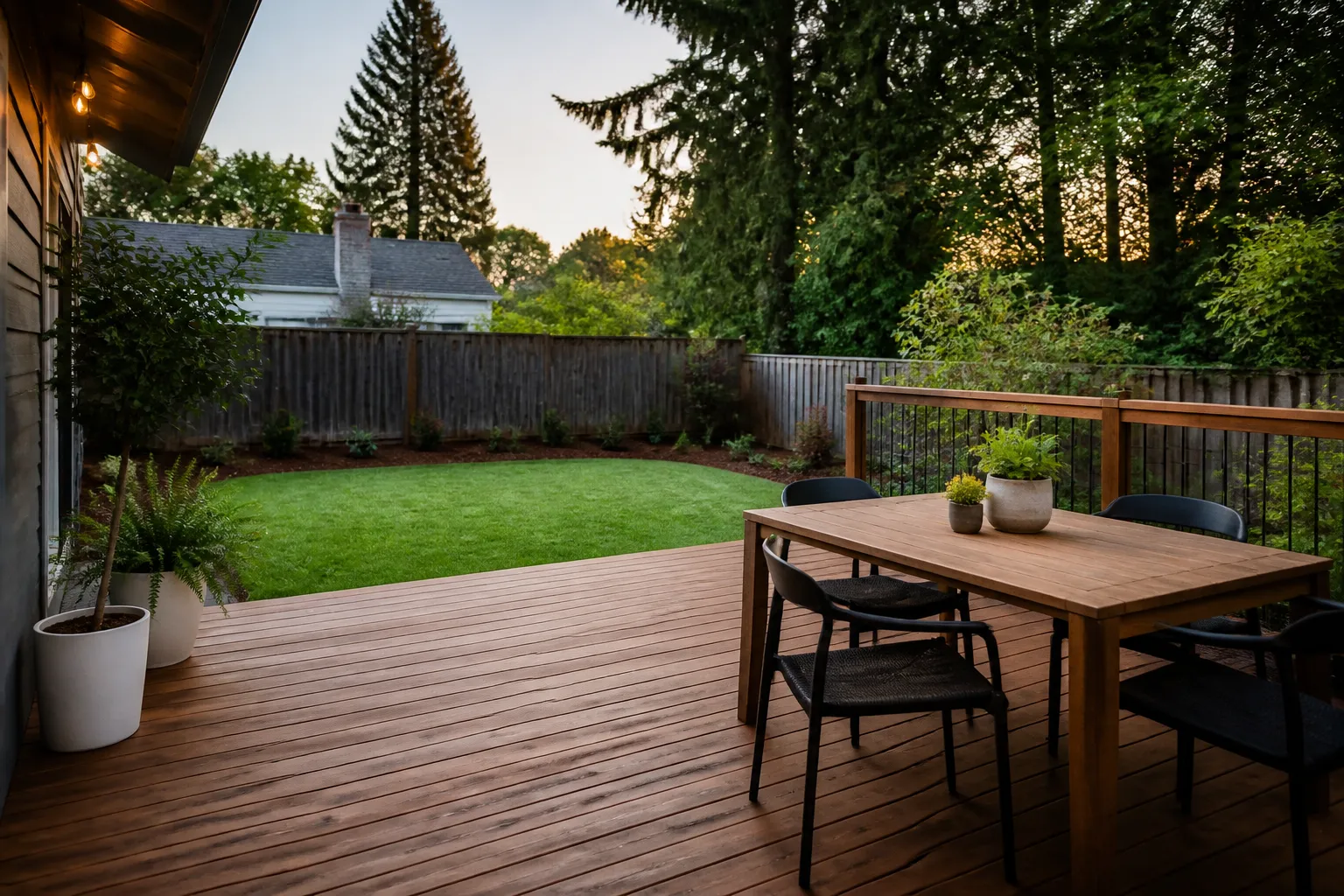
Start Your Project
Share your goals for the space, and we will help you choose the right deck, repair, or outdoor upgrade for your property. We focus on practical recommendations, clear communication, and results that fit the way you live outside.